When you search for the word “philosophy” on Google, you expect to see names like Plato, Aristotle, Socrates, Nietzsche, or Kant.
After all, we are talking about a vast intellectual tradition in which humanity has spent thousands of years questioning existence, knowledge, morality, and the meaning of life.
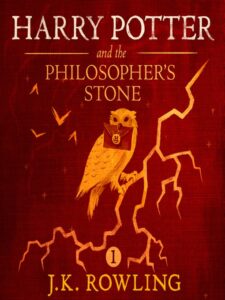
Yet every now and then, the algorithm seems to reveal a strange sense of humor, and somewhere among all that serious philosophical history, Harry Potter and the Philosopher’s Stone suddenly appears.
The first reaction is usually laughter.
Mine certainly was.
“We came here looking for philosophy, and somehow ended up at Hogwarts.”
But when you think about it for a little longer, it does not seem quite so absurd, because although Harry Potter and the Philosopher’s Stone may look like the fantasy adventure of an eleven-year-old boy who discovers that he is a wizard, beneath the magic lies a surprising number of questions that philosophy has been asking for centuries: Questions about the fear of death, the desire for immortality, free will, destiny, power, happiness, and the choices that shape who we become.
Perhaps this is one of the reasons Harry Potter has had such a lasting cultural impact.
When you encounter the story as a child, you notice the flying broomsticks, Hogwarts, spells, secret corridors, and three-headed dogs. Years later, you may return to the same story and find yourself thinking about why human beings fear death so deeply, why some people make power the center of their lives, and whether our past truly determines who we are destined to become.
And the best part is that while asking all of these questions, you are still at Hogwarts.
The Philosopher’s Stone Is Much Older Than Harry Potter
When we hear the words “Philosopher’s Stone,” it is easy to think of it as a magical object created for the Harry Potter universe. In reality, the idea is far older than the novel and reaches back into centuries of alchemical tradition.
Alchemy was not simply an early and unsuccessful version of modern chemistry.
For many alchemists, the transformation of matter was closely connected to much larger ideas about transformation itself: The perfection of nature, the possibility of extending life, the search for hidden knowledge, and even the transformation of the human being.
The Philosopher’s Stone eventually became one of the most powerful symbols within that tradition.
According to legend, this extraordinary substance could transform ordinary metals into gold, and in some traditions it was also believed to make possible an elixir capable of prolonging life. In other words, it brought together two of humanity’s oldest desires in a single object:
wealth and longevity.
And when you look at it that way, it becomes almost amusing how little human beings have changed.
We may no longer be searching laboratories for a mysterious stone capable of turning lead into gold, but we are still trying to earn more money, look younger, live longer, delay ageing, gain more control, and hold on to life for as long as possible.
Technology has changed.
Cities have changed.
The way we live has changed.
We now carry much of our world inside a small screen in our hands.
Yet the human habit of saying, “Just a little more,” has not disappeared.
A little more money.
A little more time.
A little more success.
A little more power.
A little more life.
This is where Harry Potter and the Philosopher’s Stone stops being merely a fantasy story and begins touching something much more familiar within human nature, because the real question is not simply what the Stone can do.
The more interesting question is why people want it so badly.
Voldemort’s Greatest Fear Is Not Harry Potter
When people think of Voldemort, they usually think of dark magic, the desire for power, and the need to dominate others through fear.
Yet underneath all of this lies something much more basic and strangely human:
the fear of death.
Voldemort does not want to die.
In fact, he does not merely want to live a long life. He wants death itself to lose its power over him, because in his worldview, death is not simply a natural part of life. It is the ultimate loss of control, and therefore the ultimate defeat.
This is where one of the story’s most interesting paradoxes appears.
Voldemort searches for greater and greater power in order to escape death, yet the more desperately he tries to avoid death, the more completely his life becomes controlled by the fear of it. He wants freedom from death, but instead becomes a prisoner of his own fear.
Eventually, almost every decision he makes is shaped by the very thing he is trying to escape.
This is not something that exists only in fantasy stories.
Human beings can spend an entire lifetime running from what they fear. Someone may avoid emotional attachment because they are afraid of loss, never begin because they are afraid of failure, hide their feelings because they fear rejection, or stay in an unhealthy relationship because they cannot bear the thought of being alone.
And sometimes, while trying to protect ourselves from the thing we fear most, we quietly hand over our freedom to that very fear.
For this reason, seeing Voldemort only as “the evil character” can make us miss an important part of the story.
He is driven not only by the desire for power, but also by his inability to accept something he cannot control: Death.
And perhaps the philosophical question hidden here is this:
Does escaping death make a person free, or does freedom begin when we accept that death is part of life?
Why Did Harry and Voldemort Become So Different?
Harry and Voldemort appear to be complete opposites, yet when we look more closely, we begin to notice some striking similarities between them.
Both experienced loneliness as children.
Both felt like outsiders.
Both entered the wizarding world after growing up outside it.
Both experienced loss.
Both were deeply affected by circumstances they did not choose.
Yet from similar beginnings, two completely different people emerged.
Why?
This is where one of the most powerful ideas in the Harry Potter story begins to appear.
If human beings were shaped only by what happened to them, then similar pain should always produce similar people. But we know from real life that this is not how things work. Two siblings can grow up in the same home and interpret the world in completely different ways.
The same loss can make one person harder while making another more compassionate. The same failure can cause one person to give up and become the turning point of another person’s life.
This suggests that we are not made only of what happens to us.
We are also shaped by the meaning we give to what happens to us.
One of the strongest philosophical ideas in Harry Potter, in my view, is that the story never denies the importance of the past. Harry’s childhood, his losses, and the things he has lived through obviously affect him.
But none of them turn his future into a finished script.
The past may have written some pages.
It does not have to write the entire book.
The Sorting Hat and the Question of Free Will
The Sorting Hat scene may look, at first, like nothing more than a charming Hogwarts tradition. The Hat studies each student and places them into the house that best suits their qualities, while Harry strongly hopes not to be placed in one particular house.
Yet beneath that small scene lies one of the central questions of the entire series:
If certain tendencies exist within us, do they determine who we will become?
All of us have parts of ourselves that we do not particularly like. We can feel jealousy, anger, ambition, selfishness, resentment, or even have thoughts that make us wonder, “Does thinking this mean I am a bad person?”
But not every thought that enters the mind defines our character.
There is a small but extremely important space between an impulse and an action, and perhaps one of the clearest forms of free will appears inside that space. We may not always choose what we feel, but we often have some choice over what we do with that feeling.
Harry’s story reminds us that a person is not simply the total of their abilities, their background, or their natural tendencies.
All of these things influence us.
But character is often formed through what we decide to do with them.
In other words, we may not choose the cards we are dealt.
But that does not mean we are completely powerless over how we play them.
The Mirror of Erised: Would Getting Everything We Want Really Make Us Happy?
One of the most philosophical objects in Harry Potter and the Philosopher’s Stone is the Mirror of Erised, because it does not show a person what they look like.
It shows them what they most deeply desire.
Harry sees the family he has lost.
Ron sees himself successful, recognized, and admired.
The fact that the same mirror shows two people completely different things is already a beautiful philosophical idea in itself. We live in the same world, but we do not desire the same things, because our wounds, our history, and the things we feel we are missing give shape to what we long for.
Harry does not want power.
He does not want wealth.
He does not want fame.
He wants a family.
Ron, on the other hand, longs to be seen as an individual inside a large family and to be recognized for who he is.
At this point, the mirror stops being merely a magical object and begins to resemble the human mind itself, because throughout life we all spend time staring into our own invisible Mirrors of Erised.
Sometimes the life we envy belongs to someone richer.
Sometimes someone more attractive.
Sometimes someone more successful.
Sometimes someone who seems more loved.
Sometimes we simply look at another person and think, “I wish my life looked like that.”
In the age of social media, this scene feels even more meaningful.
You unlock your phone and within minutes you can find people who appear richer, happier, fitter, more attractive, more successful, more travelled, or more deeply in love than you are.
After a while, without even noticing it, you can begin watching other people’s lives instead of actually living your own.
That is the danger of the Mirror of Erised.
There is nothing wrong with dreaming.
But a person can stare at a dream for so long that real life quietly passes them by.
There is a difference between having a dream and living inside one.
One can give you direction.
The other can keep you standing still.
The Thin Line Between Having Power and Becoming Its Prisoner
Power appears constantly throughout the Harry Potter universe: Stronger magic, more gifted wizards, greater abilities, influence, authority, and the desire to control other people.
Yet one idea becomes increasingly clear as the story develops: there is a major difference between possessing power and becoming dependent on it.
Voldemort believes that gaining more power will make him freer.
Instead, he becomes increasingly afraid.
He fears losing his strength.
He fears losing control.
He fears being defeated by someone stronger.
He fears death.
And eventually, the power that was supposed to liberate him becomes something he must constantly defend.
This does not apply only to political or physical power.
Money can work the same way.
So can status.
Beauty.
Success.
Even the way other people see us.
There is nothing wrong with wanting financial security, achievement, or recognition, but the moment someone begins measuring their entire worth through those things, the relationship changes. Instead of simply possessing something, they begin allowing that thing to possess them.
Success is similar.
At first, a person may want success because they want to build a better life. Later, they may find themselves living only to avoid appearing unsuccessful.
And this is where an uncomfortable but important question emerges:
Are you using the thing you possess, or has it quietly begun using you?
Sometimes freedom is not about having more.
Sometimes it is about refusing to let the fear of losing what we have control our lives.
Is Immortality Really a Reward?
One of the greatest promises associated with the Philosopher’s Stone is a longer life, and to be fair, that sounds extremely attractive at first.
Why would anyone want a life they love to end?
A few more years, a little more time, a few more experiences none of that sounds like a bad thing.
But what happens when we make the question bigger?
Not one hundred years.
Two hundred years.
Five hundred.
A thousand.
What if you continued living while everyone you loved grew old and disappeared? What if cities changed beyond recognition, entire generations passed, and every person you became attached to eventually became part of your past?
Would endless life still feel like a gift?
Perhaps one of the things that gives life meaning is precisely the fact that it is limited.
The existence of a final page does not make the first page of a book meaningless. If anything, knowing that the number of pages is limited may make us read them more carefully.
Life may work in a similar way.
If we believed every day would repeat forever, perhaps an ordinary cup of coffee, a short conversation with someone we love, or a quiet afternoon doing absolutely nothing would lose some of its value.
But when we understand that time is finite, even ordinary moments begin to feel different.
That is why Harry Potter and the Philosopher’s Stone does more than tell us a story about people searching for immortality.
It quietly asks another question:
Is the most important thing how long we live, or what we do with the life we have?
Perhaps the Real Philosopher’s Stone Is Choice
At the beginning of the story, the Philosopher’s Stone appears to be one of the most valuable objects imaginable. It can create wealth, prolong life, and push human existence beyond its ordinary limits.
But as the story progresses, something else becomes clear.
The most valuable thing is not the Stone itself.
Harry is not defined by being the most powerful person in the room.
Very often, he is not.
What defines him is what he does with the power he has, how he treats people when he is afraid, what kind of friend he chooses to be, and which direction he takes when life places a choice in front of him.
Perhaps that is why Harry Potter begins to tell a different story when we return to it as adults.
As children, we see the magic.
As adults, we see the choices.
As children, we are afraid of Voldemort.
As adults, we begin to understand what Voldemort himself is afraid of.
As children, we imagine how incredible it would be to possess the Philosopher’s Stone.
As adults, we start questioning whether getting everything we desire would actually make us happy.
And perhaps that is exactly what philosophy has always done.
It does not always give us new answers.
Sometimes it simply teaches us to ask new questions about things we thought we already understood.
So perhaps we should not be too surprised when Harry Potter appears in a search for philosophy.
Maybe Google was being more philosophical than we first thought.
Because sometimes you reach philosophy through Aristotle.
Sometimes through Nietzsche.
And sometimes, all it takes is an eleven-year-old boy with round glasses boarding a train to Hogwarts.
In the end, the question is still the same:
Are we defined by the powers we possess, by what happens to us, or by the choices we make in the middle of it all?
Perhaps the real Philosopher’s Stone in the Harry Potter universe was never the Stone itself.
Perhaps the real transformation was the human ability to transform ourselves.