This article is also available in Turkish: Read the Turkish version.
Think about the phone you are holding. The photographs, messages and voices it stores. Then picture your apartment building, the road you take each day and the city whose lights stay on through the night. All of these seem like undeniable evidence that we are here.
But if humanity disappeared today and someone explored Earth 50 million years from now, how would they recognize us?
This is a thought experiment. Could those future researchers discover how we lived, what we loved or how advanced we believed ourselves to be? Or would they infer our existence from a thin layer of material whose meaning they were still trying to understand?
The Silurian hypothesis turns that question toward the past. If an industrial civilization had existed millions of years before us, could we recognize its traces today?
The question captures our imagination before we have an answer. Once we begin considering it, our confidence in the permanence of our own world starts to waver.
What does the Silurian hypothesis ask?
In a paper first published in 2018, Gavin Schmidt and Adam Frank explored how an ancient industrial civilization might be detected in the geological record. They considered industry in terms of using external energy sources on a global scale. Their paper reports no discovery of such a civilization. [1]
That is also how we should understand the phrase “modern world” in the title. A hypothetical civilization would not need to resemble us, use phones or build cities like ours. The intriguing question is whether another form of life could have become organized enough to transform the planet.
Here lies the philosophical puzzle. We might be ready to recognize a past that resembles our own. But if we encountered traces of a past unlike anything familiar, would we understand them?
Recognizing an object often involves guessing its purpose. When we do not know what a fragment was used for, the story we construct around it can change quite easily. Curiosity therefore needs a willingness to question our interpretations. We can also explore what understanding requires through the Chinese Room paradox.
Does Earth keep a record of everything?
Imagine looking through an old family album. There are dozens of photographs from certain years and none from another period. Those missing pictures do not mean the years never happened. But learning what took place requires other evidence.
When we examine Earth’s past, we also need to consider how its records formed. Gaps can appear where sediments stopped accumulating or erosion removed earlier layers. Comparing records from different locations helps researchers reconstruct a fuller history. [2]
The preservation of bodies is not automatic either. Fossilization depends on burial conditions, the organism’s structure and what happens afterward. An individual organism has a low chance of becoming a fossil, yet the fossil record still provides a rich history of life. [3]
We need to hold two ideas together. We know a great deal about the past, and we do not possess every detail of it.
There is a familiar version of this difficulty in daily life. We might read a few messages and assume we understand an entire relationship. Yet the surviving fragments may not represent everything that happened. Part of the patience research demands is resisting the urge to turn a small piece of evidence into a complete story.
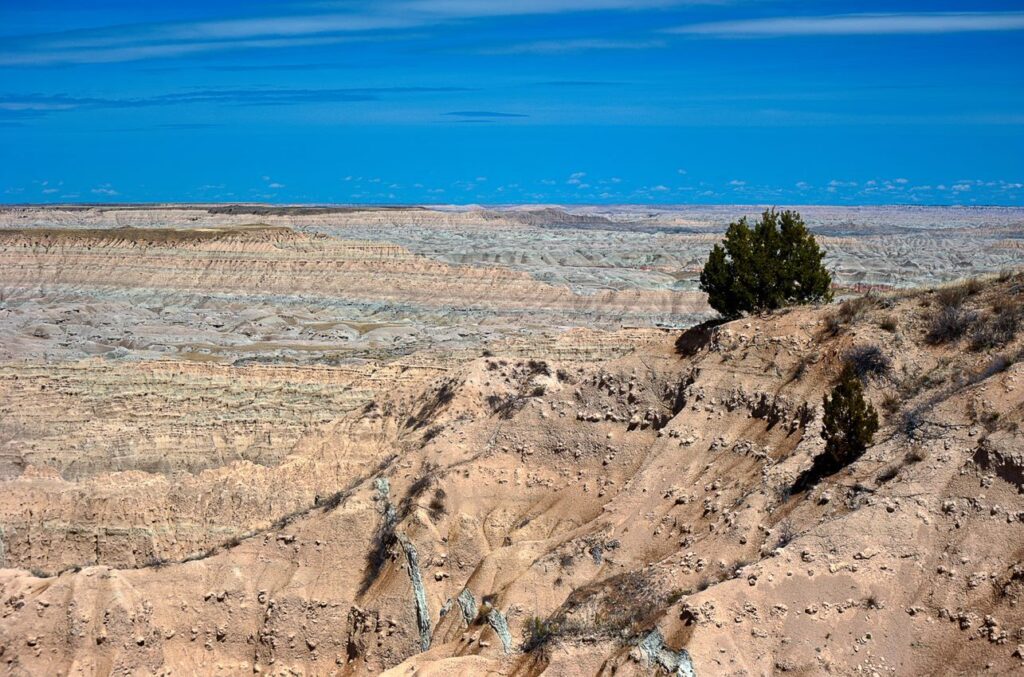
What would you look for as a researcher in the distant future?
Now put yourself in the position of that future researcher. You have no dictionary explaining our language. You do not know which country we belonged to, which song made us cry or what we considered a successful life.
You have only material traces.
Imagine taking an object to a laboratory. You have no idea how much it mattered to the person who used it. Perhaps it was a treasured possession. Perhaps it was packaging they discarded without a second thought. The material alone might not reveal the difference. While asking what its makers valued, you could project your own values onto them. Investigating the past would also require examining the perspective through which you interpret it.
Researchers use the term “technofossils” for material remains of human technology that can be preserved. Their materials, shapes and changes over time can provide a record of human activity. [4]
There is already a concrete example. A study on the Brazilian coast examined rocks containing plastic fragments, metal bottle caps and other manufactured objects cemented together with natural materials. This does not prove that these objects will survive for millions of years. It shows that objects we use today can become incorporated into geological formations. [5]
What would someone investigating us make of such a find? Could a bottle cap reveal the people who once sat around the same table? Could a plastic fragment tell them about our shopping habits, economic arrangements or expectations?
Finding evidence of a civilization and understanding the lives within it are very different achievements.
There may also be a considerable distance between what we want to represent us and the materials we leave behind. We describe ourselves through our poetry, discoveries and relationships. A researcher might instead recover an ordinary object we threw away. That possibility gives the question “Who are we?” an unexpected dimension.
When does a trace become evidence?
The paper considers possible signals including changes in carbon isotope ratios associated with fossil fuel use, metal accumulations in sediments and synthetic compounds. Some environmental changes also have natural causes. Assessing a possible industrial origin would therefore require examining several lines of evidence together. [1]
This brings us to a central question in the philosophy of knowledge. Is an explanation being possible enough reason to accept it?
A hole in your garden could have several causes. To work out which explanation is correct, you examine the surroundings, look for additional traces and compare possibilities. Generating explanations begins an investigation. Choosing between them requires evidence.
Similarly, “We have not found it yet” cannot stand in for evidence that an ancient civilization existed. When considering a claim that something never existed, we should also ask how likely its expected traces were to survive and be found.
A good question does not oblige us to believe any particular answer. Sometimes its greatest value is making us notice what would lead us to change our minds. Investigation becomes richer when curiosity and care work together. A similar distinction between observation and interpretation matters when applying the Universe 25 experiment to human society.
Why do forgotten worlds fascinate us?
Imagine finding a letter in an attic without knowing who wrote it. Suddenly, another time opens within the house. The thought that someone else once waited beside the same window changes how you see the place.
The possibility of a forgotten civilization can inspire a similar curiosity. It places other lives before the world we know and gives us questions to ask about them.
But we can also ask ourselves something personal. Are we drawn by the desire to understand the past or by the excitement of a surprising story? Both can be present. What matters is not allowing an appealing story to determine the outcome before the investigation begins.
Noticing that a claim excites us can be the first step toward examining it more carefully. Keeping “I want this to be true” separate from “There is evidence supporting this” is a habit of scientific curiosity that we can practice in everyday life.
What do we mean by “advanced”?
How would you decide whether a civilization was advanced? Would you measure how much energy it used, how large its buildings were or how long it survived?
These measures might lead to different judgments. A society’s ability to create powerful tools leaves open the question of how it uses them. Technical skill and justice are not automatically equivalent. The size of a building alone cannot tell us how people lived in the society that built it.
We can consider the same issue in our own lives. Someone’s possessions, professional titles and workplace may tell us something about their resources. Those details do not fully explain how they treat other people.
Even if we imagined discovering traces of an ancient industrial civilization, further questions would follow. What had it used its power for? Who had benefited from its arrangements? Learning what it produced would be a starting point for understanding the kind of life it made possible.
Being remembered and living well
If one day none of our names can be read, does that diminish the meaning of what we do today?
We can bring this question down from the scale of civilizations to our own lives. Does the value of supporting someone through a difficult day, teaching a child or caring for an animal depend on being discovered millions of years later? Does its effect on a living person or creature not have value in itself?
The philosophical questions opened by the Silurian hypothesis invite us to reconsider permanence and meaning. Wanting something to last forever is understandable. Yet if we make permanence a condition of every experience we value, how can we account for the place of temporary things in our lives?
A conversation ends, but the understanding reached during it has value. A song finishes, but its effect on the listener matters. Thinking about how our civilization might be interpreted in the future can also prompt us to consider how we treat one another today.
Nor does the size of the trace we leave have to measure our moral achievement. Consuming more and transforming the environment more extensively might make us easier to detect. Our responsibilities to the future cannot be determined solely by the desire to be noticed.
The question beneath the ground
Look at your phone again. A photograph inside it may hold a memory that is unique to you. Its importance already exists within your life, regardless of whether someone in the distant future will ever find it.
There is no verified evidence of a modern civilization before humanity. The Silurian hypothesis asks what would count as evidence when investigating such a possibility. [1]
Returning from that question to the present, we can ask ourselves something else. While wondering how the future might remember us, what kind of mark are we choosing to leave on the world today?
Sources
2. Utah Geological Survey. Rock Dating: comparing geological records and understanding gaps.
3. U.S. National Park Service. How Fossils Form: fossilization and preservation.
4. Zalasiewicz and colleagues (2014). The technofossil record of humans.
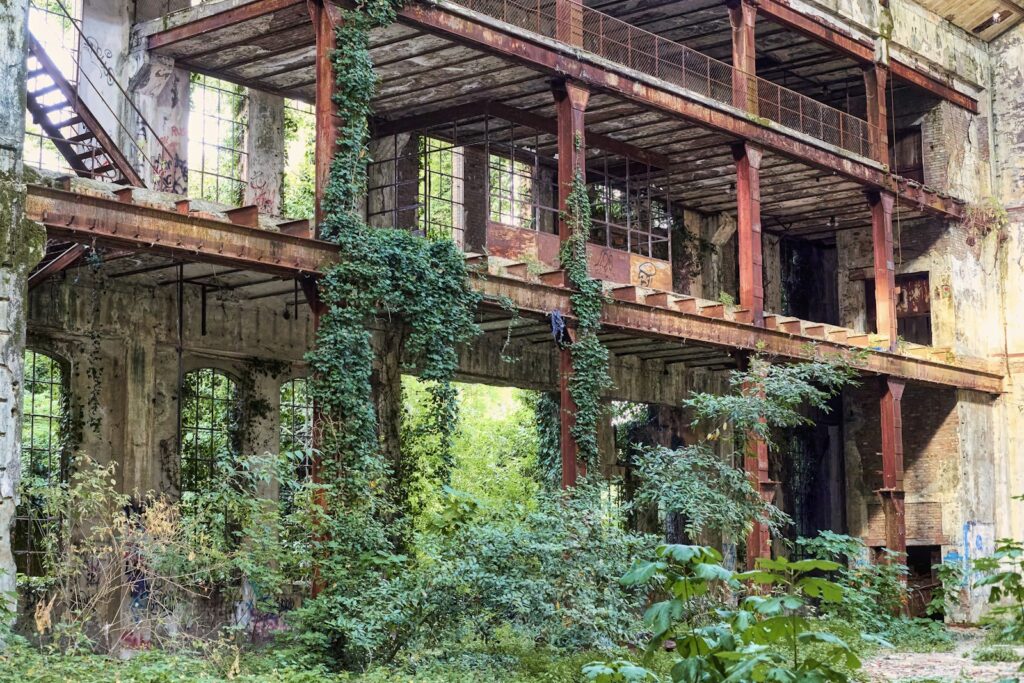
Cover photograph: Samuele Garbuglia / Unsplash, used under the Unsplash License. The photograph shows a present day abandoned building and accompanies the thought experiment.
Pingback:Silüriyen Hipotezi: Bizden Önce Modern Bir Dünya Var mıydı?