A Success Story: The Right Person, the Right Time, and the Making of a Global Brand
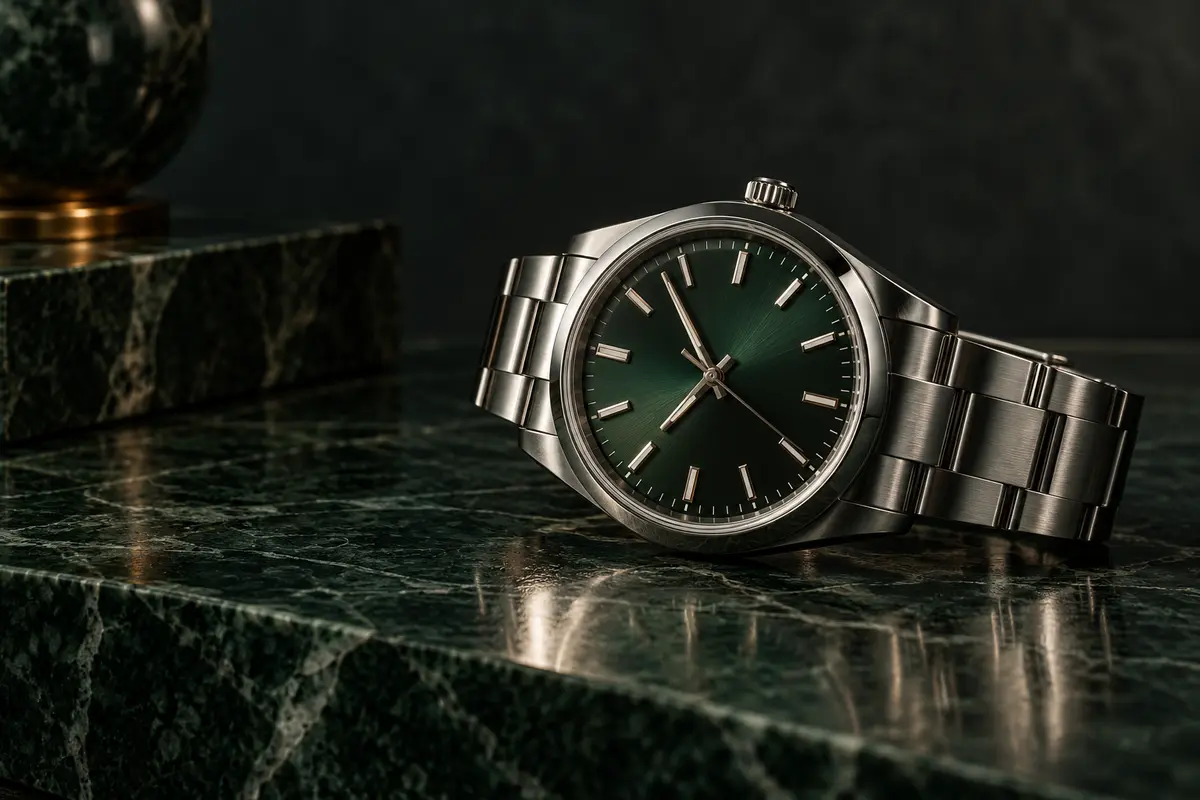
Rolex. Five letters are enough to evoke success, status, quality and permanence. The name now lives far beyond watch boutiques. It appears in songs, films and everyday speech as a shorthand for achievement.
That reputation cannot be explained simply by the production of an expensive object. Rolex raises a more difficult question: Does success come to the right person, emerge at the right moment, or arise when a person and an era meet?
What need does a great brand discover?
Hans Wilsdorf was born in Bavaria in 1881 and entered the watch trade as a young man. In 1905, at the age of twenty-four, he and Alfred Davis founded Wilsdorf & Davis in London. Pocket watches were still common. Wristwatches, especially for men, had not yet become trusted everyday instruments. Their small mechanisms were often regarded as fragile or inaccurate. [1][2]
Wilsdorf’s opportunity did not lie in inventing an entirely new object. It lay in recognising what an existing object might become. Modern life was growing faster and more mobile. People needed a practical way to read the time without reaching into a pocket. The wristwatch could answer that need, but first it had to overcome a problem of trust.
Is being in the right place at the right time enough?
An opportunity created by history and the ability to use that opportunity are not the same thing. The rise of the wristwatch was a historical opening. Wilsdorf’s decision to seek small, precise movements, work with reliable manufacturers and unite the product under an international brand shows the human part of the story.
The name Rolex, registered in 1908, belonged to this strategy. Wilsdorf wanted a word that was short, easy to pronounce in different languages, memorable and visually balanced on a watch dial. The decision was not merely aesthetic. It prepared a local business to become a global identity. [2]
Success here belongs neither entirely to luck nor entirely to individual will. The right moment may open a door, but recognising which door matters requires preparation and judgement.
Trust came before prestige
A high price does not automatically give a brand authority. Lasting reputation develops when the promise attached to a product repeatedly matches people’s experience of it. Rolex’s early challenge was therefore not to look luxurious. It was to prove that a wristwatch could be precise and dependable.
In 1910, a Rolex wristwatch received a Swiss Certificate of Chronometric Precision. In 1914, the Kew Observatory awarded a Rolex wristwatch a Class A precision certificate, a distinction more commonly associated with marine chronometers. The company then turned to the problem of dust and water entering the case. In 1926, it introduced the Oyster, a waterproof and dustproof wristwatch. [2][3]
Rolex made precision and durability visible. Prestige did not replace technical credibility; it was built upon it.
Why does quality need a story?
The existence of a good product and public knowledge of its quality are two different things. Wilsdorf understood this distinction early. In 1927, British swimmer Mercedes Gleitze wore a Rolex Oyster during her attempt to cross the English Channel. The watch remained in cold water for more than ten hours and continued to work. Rolex later presented the event in a prominent newspaper advertisement. [3]
This was more than conventional advertising. An abstract quality became an event people could picture. “Waterproof” was a technical description; a working watch on a swimmer’s wrist was memorable proof.
Rolex transformed engineering into a story without separating the story from the product. The Perpetual rotor, developed in 1931 and powered by wrist movement, continued this pattern by joining technical progress to everyday convenience. [3]

How does a watch become part of identity?
Consumer psychology suggests that people do not choose possessions only for their practical functions. Russell Belk’s theory of the “extended self” argues that possessions can become part of how people construct and communicate identity. An object may represent memory, belonging, achievement or the person someone hopes to become. [5]
A wristwatch is especially suited to this role. It is worn on the body, remains visible in daily life and may stay with its owner for decades. Over time, Rolex acquired meanings beyond timekeeping. In some social settings it came to signal discipline, financial achievement, professional progress or a commitment to enduring quality.
Research on luxury consumption also shows that status is communicated in different ways. Some consumers prefer prominent branding; others value quieter signals recognised mainly by people familiar with the product. Luxury cannot be reduced to simple display. [6]
This also recalls the difference between healthy self-confidence and social comparison. An expensive watch does not, by itself, reveal a person’s character. Its meaning depends on intention and context.

Why did Rolex enter the language of music?
A brand becomes a cultural symbol when its name can replace a long explanation. In popular culture, Rolex often means more than a watch. It can express “I made it,” “I moved upward,” or “I am visible now.” Its power in song lyrics comes from this compression: five letters can carry a long social story.
The company did not create that meaning alone. Consumers, musicians and athletes added their own associations. Rolex became recognisable even to people who knew little about watchmaking.
Luck or agency?
In Chapter XXV of The Prince, Machiavelli considers the relationship between fortuna, or fortune, and the human capacity to respond to circumstances. Chance influences life, but preparation, adaptability and action also shape outcomes. [7]
Wilsdorf did not choose to be born into an age in which wristwatches could flourish. Industrialisation, faster urban life and technological change were historical conditions.
Yet his choice of problems, investment in precision, creation of an international name and use of public tests cannot be explained by fortune alone. Many people stood inside the same field of opportunity; few combined its elements with equal consistency.
Reducing success to “being in the right place at the right time” ignores judgement and effort. Explaining it through determination alone makes history and unequal opportunity disappear. Success often begins where circumstance meets readiness and chance meets decision.
Success that continued beyond the founder
In 1945, Wilsdorf established the foundation that bears his name. Today, the Hans Wilsdorf Foundation owns the Rolex group and supports social, educational, cultural, humanitarian and environmental work. [4]
This structure does not prove the popular claim that Rolex is “the only company in the world that cannot be bought.” Foundation ownership does not establish that no comparable structure exists or that an acquisition would be impossible under every circumstance.
Wilsdorf did not leave only a successful product. He helped design an organisation capable of continuing beyond his lifetime. Personal achievement becomes more durable when it becomes a system that no longer depends on one person’s presence.
Who owns success?
Rolex did not become a global brand for one reason. History created space for the wristwatch. Technical partnerships produced reliable mechanisms. Wilsdorf recognised a future need and built a name around it. Public demonstrations made quality visible. Consumers connected the product with identity and achievement.
Opportunity requires preparation and sustained effort, yet not everyone encounters the same historical possibilities. Success is neither a miracle reserved for a chosen person nor a formula that produces identical results for everyone.
Rolex now does more than tell the time. It has become a symbol of where people believe they have arrived within time. Perhaps that is the brand’s greatest achievement: turning an instrument of measurement into a shared language for thinking about success.
Sources
- University of Geneva, Fondation Hans Wilsdorf: Background and Founder Incentive.
- Rolex, History 1905–1919.
- Rolex, History 1926–1945.
- Fondation Hans Wilsdorf, The Foundation.
- Belk, R. W. (1988). “Possessions and the Extended Self.” Journal of Consumer Research, 15(2), 139–168.
- Han, Y. J., Nunes, J. C., and Drèze, X. (2010). “Signaling Status with Luxury Goods: The Role of Brand Prominence.” Journal of Marketing, 74(4), 15–30.
- Machiavelli, N. The Prince, Chapter XXV.