
Patrick Jane walks into a room. He notices a fleeting change in someone’s face, glances at another person’s hands and picks up on a pause in the conversation. Then he asks a question that leaves someone startled: How did he know that? One of the pleasures of watching The Mentalist is seeing details we might overlook in everyday life suddenly become important.
The connection between The Mentalist and microexpressions opens a window onto a fascinating area of psychology: How do we interpret people’s faces, gestures and ways of speaking? Selective attention, nonverbal communication and stress responses can help us discuss Patrick Jane’s methods. The show’s impressive deductions, however, should not be treated as equivalent to findings supported by scientific research.
This article contains spoilers, particularly for “Seeing Red” and “Devil’s Cherry.”
What are microexpressions? What is Patrick Jane looking for?
Microexpressions are very brief facial expressions. Research often uses facial expressions presented for less than half a second. The idea that such expressions might appear when someone tries to conceal an emotion has attracted considerable interest. Yet not every rapid facial movement is a microexpression, and noticing a brief expression does not reveal a person’s hidden thoughts. [1]
Think of Jane watching someone’s face during a conversation. A brief movement of the eyebrows, tension around the lips or a smile that suddenly disappears might catch his attention. On screen, the detail often acquires a meaning almost immediately. In real life, which emotion a movement might relate to, why that emotion arose and how it connects with what the person is saying are separate questions.
We cannot automatically equate a facial movement, an emotion and an intention. An expression that looks like fear does not explain what someone is afraid of. An innocent person worried about being accused may be frightened too. The subject might also have brought an entirely different memory to mind.
More than one psychological process is at work
Facial expressions, gestures, posture, gaze direction and the nonverbal features of the voice are studied as part of nonverbal communication. Drawing inferences about other people’s feelings, thoughts and goals belongs to the broader area of social cognition. Microexpressions are only one small part of that picture. [2]
Explaining Jane solely in terms of facial muscles would therefore miss a great deal. The show portrays him using objects in the environment, people’s accounts, information he already knows and the direction of a conversation. He evaluates one detail alongside others. A scientific discussion of these abilities needs to consider observation, attention, memory and inference together.
Why does Jane object to being mistaken for a psychic?
Jane has a history of performing as a psychic medium. The show’s official description explicitly states that he later acknowledged having faked his paranormal abilities. That history helps explain his resistance when people attribute supernatural powers to him: A result may look astonishing, but he knows where the information he used came from. [3]
His encounter with a self-described psychic in “Seeing Red,” Season 1, Episode 7, makes that attitude particularly visible. Jane arranges a séance to expose the deception. His objection concerns the presentation of observation and performance techniques as an unexplained power. [4]
The Barnum–Forer effect is also useful here. A broad personality description that could apply to many people can feel as though it was written specifically for us. “You want to trust people, but you have been disappointed in the past” is an everyday example. Forer’s classic study was an early demonstration that a description’s feeling personally accurate is not, by itself, evidence that the assessment is valid. This effect does not explain all of Jane’s deductions. It helps us understand why some striking readings can feel so personal and convincing. [5]
Spotting details others miss: selective attention
Part of Jane’s skill concerns where he looks. We can all look into the same room without noticing the same details. Selective attention involves prioritising some information while the processing of other information is limited. In Simons and Chabris’s well-known attention experiment, participants concentrating on a particular task could miss an unexpected event in the scene. [6]
Watching the show from this perspective can be fun. Is Jane looking only at the speaker’s face, or is he scanning the environment too? Is he connecting an object with the story being told? The point is not simply to see exceptionally well; it is to decide which details deserve a closer look.
Experience can influence that choice. Radiology research, for example, has found that experts can orient more quickly towards meaningful patterns in an image. This does not establish an ability to read human behaviour perfectly. It illustrates how expertise can change visual search within a specific field. When considering Jane’s experience, we should likewise distinguish domain knowledge from a general ability to “notice everything.” [7]
Why can hands, faces and voices change under stress?
When a conversation becomes difficult, some people fidget more, touch their face or shift their posture. Others become less expressive. Studies have found associations between anxiety and the frequency of self-touch. One study reported that self-touch during conversation was associated with a person’s current anxiety. It was correlational and could not establish the cause of each individual movement. [8]
That is one reason Jane’s attention to a change in behaviour after a question is interesting. The question may have introduced a particular subject, and the person may have become tense at that moment. Concealing a crime, however, is only one possible explanation. Fear of being misunderstood, privacy concerns, social anxiety, fatigue and the pressure of the situation also need to be considered.
A hand movement does not have a fixed dictionary definition. Touching the nose does not automatically mean lying, folding the arms does not automatically mean defensiveness, and looking away does not automatically mean guilt. Our article on nonverbal communication and body language (in Turkish) explores this need for context in more detail.
Can microexpressions work like a lie detector?
Recognising an emotional expression and determining whether someone is telling the truth are different skills. The FBI’s review of the scientific evidence stresses that familiar signs such as gaze aversion and fidgeting are not reliable indicators of lying. It also reports no reliable relationship between microexpressions and deception. [9]
In research by Zloteanu and colleagues, training in recognising facial expressions did not improve deception detection either. Reading emotional information in a face does not provide direct access to a concealed truth. [1]
That distinction need not spoil the appeal of the show. The conclusions Jane reaches in seconds are part of its dramatic storytelling. In a real assessment, observations need to be followed by information that can be checked: the timing of events, other witnesses, records and the person’s explanation. Combining several ambiguous movements does not automatically turn them into conclusive evidence.
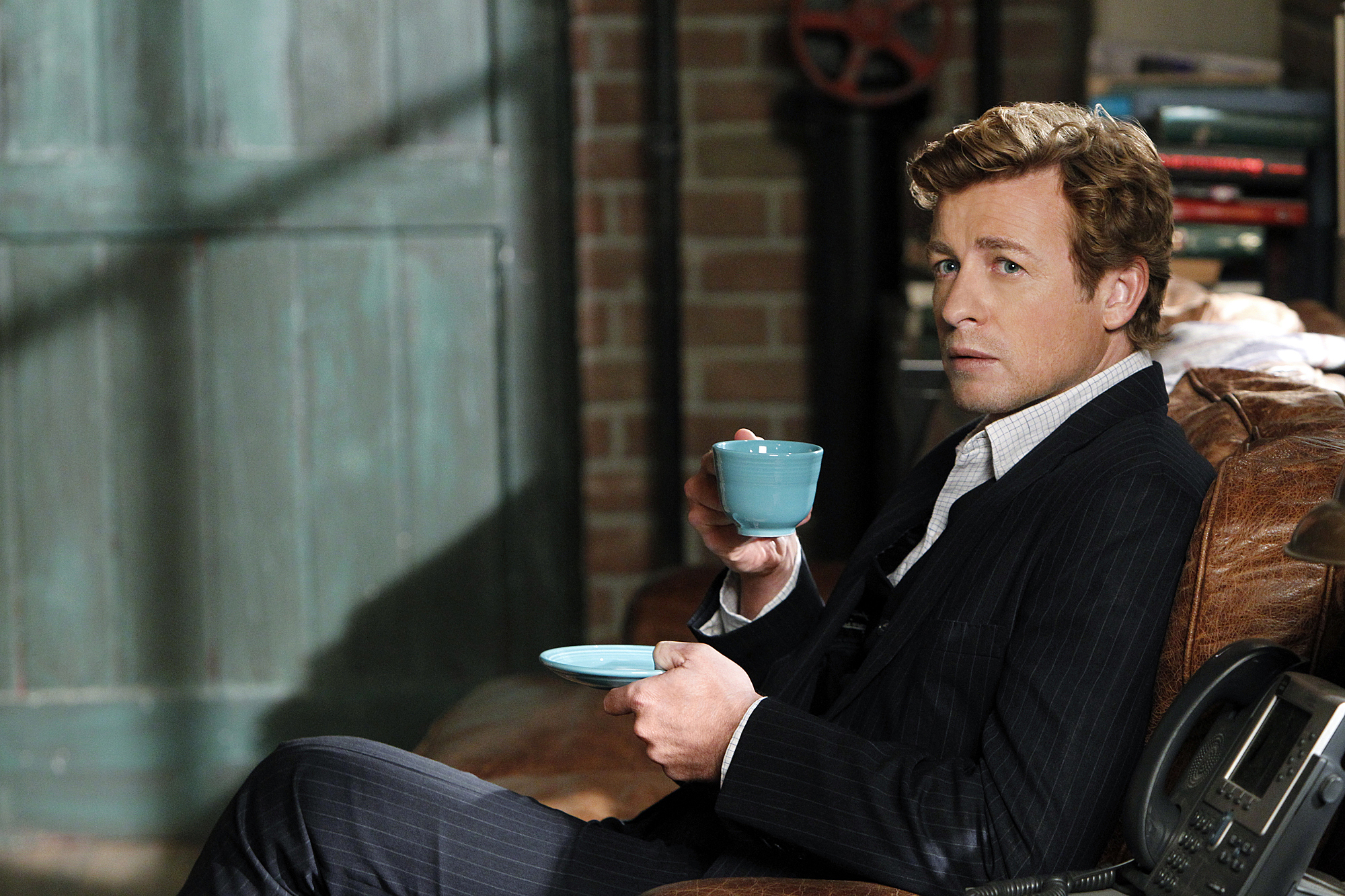
Watching a Jane-style scene through a scientific lens
Imagine someone briefly pressing their lips together when a particular name is mentioned, placing their teacup on the table and pausing before answering. This is not a scene quoted directly from the series. It is a hypothetical example for thinking about Jane’s observational style.
The first step is to record only what happened: a facial movement, a cup set down, a delayed answer. The second is to consider possibilities: The name might have sounded familiar, upset the person or surprised them. The third is to test the explanation. One could ask, “What does that name bring to mind?” and compare the answer with independent information.
Jumping straight to “They know this person and are hiding their guilt” confuses an observation with an interpretation. A useful viewing habit is to keep track of what we actually saw and what Jane inferred from it.
The tea scene: substance-induced hallucinations
“Devil’s Cherry” is Season 5, Episode 2. After drinking tea containing belladonna, Jane experiences perceptual disturbances and encounters Charlotte. Substance-induced hallucinations is one way to describe the experience. Belladonna poisoning accompanied by disturbances in attention and awareness is considered in terms of anticholinergic toxicity and delirium. This is an explanatory framework rather than a definitive clinical diagnosis of a fictional character. [10] [11]
Belladonna contains substances that disrupt acetylcholine signalling through muscarinic receptors in the nervous system. Clinical case reports describe confusion, perceptual disturbances and hallucinations. The scene therefore cannot be explained as an ordinary cup of tea revealing another reality. Belladonna can cause severe and potentially fatal poisoning; the scene is not an experiment to imitate. [11]

Why Charlotte? Grief, memory and expectations
The fact that Jane sees his daughter matters when considering the emotional content of the experience. Charlotte’s death, his longing for her and his thoughts about who she might have become occupy a central place in his life. The idea that this personal material enters the experience as the substance disrupts perception is a psychologically plausible interpretation. The episode does not establish its precise neural mechanism.
Perception research suggests that expectations can contribute to sensory experiences under some conditions. Powers and colleagues found that learned expectations were associated with some participants reporting a sound that was not present in a laboratory task. This experiment does not directly explain seeing a deceased loved one under the influence of belladonna. It is an example of how prior learning can affect perception. [12]
Bereavement research has also recorded people describing a sense of their deceased loved one’s presence, or experiences of seemingly seeing or hearing them. Rees’s study of people who had lost a spouse is a classic example. These findings do not mean that losing a spouse and losing a child are identical, or that everyone who grieves will experience hallucinations. Longing for someone for years is also different from continuously hallucinating them for years. [13]
A scientific reading can hold two levels of explanation in view: Poisoning is the trigger for the altered perception shown in the episode, while the significance of the person Jane sees can be discussed through loss, memory and longing. Our article on dreams and hallucinations (in Turkish) offers further discussion of the differences between related experiences.
A small viewing game for the next episode
Pause a conversation scene before Jane explains his deduction. Write down just three details you actually noticed: perhaps a movement, a spoken sentence and an object in the room. Then think of at least two possible explanations for each detail. Resume the scene and check what additional information Jane uses. It adds a small observation game to the pleasure of watching, while highlighting the difference between noticing and guessing.
What makes microexpressions interesting is how quickly faces and communication can change. Patrick Jane keeps our curiosity about those changes alive. Research adds a useful habit: following that curiosity with questions whose answers can be checked.
Frequently asked questions
Does seeing a microexpression mean someone is lying?
Not on its own. There is no reliable, universal connection between a brief facial expression and the truth of what someone is saying. Context and independent information are needed. [1, 9]
What is the scientific name for what Patrick Jane does?
There is no single name. Nonverbal communication, social cognition, selective attention and experience-based pattern recognition help us discuss different aspects of the character. Mentalism is not the name of a clinical method encompassing all these scientific fields.
Does seeing his daughter after drinking the tea suggest psychic powers?
The episode frames the experience through poisoning and altered perception. Connecting the appearance of Charlotte with grief and memory is a psychological interpretation. The scene does not provide scientific evidence of supernatural communication. [10–13]
Sources
- Zloteanu, M., et al. (2021). Veracity judgement, not accuracy. Quarterly Journal of Experimental Psychology.
- American Psychological Association. Nonverbal communication. APA Dictionary of Psychology.
- The Mentalist. Official series description, Apple TV.
- Seeing Red. The Mentalist, Season 1, Episode 7. Official episode synopsis, Apple TV.
- Forer, B. R. (1949). The fallacy of personal validation. Journal of Abnormal and Social Psychology, 44, 118–123.
- Simons, D. J., & Chabris, C. F. (1999). Gorillas in our midst. Perception, 28, 1059–1074.
- Visual expertise in detecting and diagnosing skeletal fractures (2012). Research abstract, PubMed.
- Individual Differences in Conversational Self-Touch Frequency Correlate with State Anxiety (2022). Journal of Nonverbal Behavior.
- High-Value Detainee Interrogation Group (2016). Interrogation: A Review of the Science. Chapter 4: Detecting Truth and Deception. FBI.
- Devil’s Cherry. The Mentalist, Season 5, Episode 2. Official episode information, Apple TV.
- Berdai, M. A., et al. (2012). Atropa Belladonna intoxication: a case report. Pan African Medical Journal.
- Powers, A. R., Mathys, C., & Corlett, P. R. (2017). Pavlovian conditioning-induced hallucinations result from overweighting of perceptual priors. Science, 357, 596–600.
- Rees, W. D. (1971). The hallucinations of widowhood. British Medical Journal, 4, 37–41.
Pingback:Why Do People Hide Their Feelings? The Psychology